Originally posted on FB 03/02/2019
I found this post on secondary losses on a FB group for bereaved parents a couple of weeks ago and I have been thinking about the secondary losses I have felt since June 3, 2017. I made some minor edits in the text and added/removed items in the original list. The original can be found at a link at the bottom of this article. I think secondary losses could also apply in other instances of loss, such as the death of a parent or spouse or a close friend, end of a long-term relationship, and the slow decay in a relationship due to the consequences of aging. The list might look quite different in these different circumstances, but the central idea can be applied to them: identify the losses and give each the space and consideration necessary to reconcile with them. Through the peer-to-peer support provided by Alive Alone, I have been able to work through some of these in the 7 years since I originally posted it. It is an ongoing work.
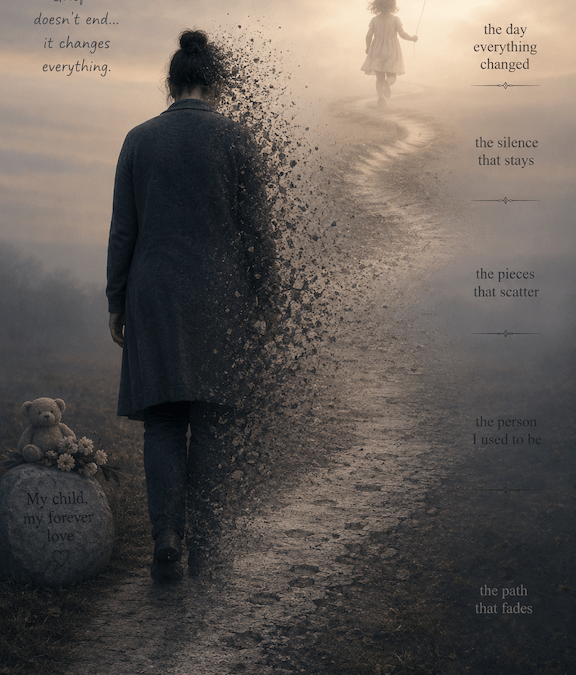
The death of our child is termed a ‘primary loss ‘. Sadly, it’s not the only loss we must endure. Many bereaved parents fail to realize that the moment our child dies, we begin to experience ‘secondary losses‘. And these, like the devastating loss of our child, must also be grieved. For those new to the term, ‘secondary losses’ refers to all the collateral damage that comes as a result of the death of a loved one. These subsequent, highly personal losses form a huge part of grief. So, how long is your list? Have you ever made one?
It’s not uncommon for bereaved parents not to have a list at all.
We’re so overwhelmed by our grief that we can’t make head or tail of it. In fact, it took me well over two years to even understand the implications of secondary loss because I was so crushed by the living nightmare that was my ‘new normal’.
Secondary loss works like a ripple effect. It flows out from the death of our child or loved one and grows ever wider, changing all the time. It’s all the losses that no one tells you about, but you will be confronted with and forced to grieve, consciously or unconsciously, nonetheless. That’s why it’s helpful to identify them. In pinpointing exactly which secondary losses we’re grieving, we can address each one and give it the consideration and space it deserves
When friends and family find it difficult to comprehend the depth of our loss and ask why we’re not ‘moving on’ it is often because they haven’t understood secondary losses. I showed friends my list and they were shocked. They’d never thought about how the death of my son affected simple things such as taking a photograph or planning a holiday. I then added that I’d stopped arbitrarily at 80 simply because the list, in fact, has no end. One girlfriend looked dumbfounded: “So many are invisible. I never guessed.”
So, I urge you to make your own list.
Or perhaps even print out the list below, highlighting the secondary losses that speak to you and adding your own. For me, the list helps me to carry my loss. And perhaps by showing our list to those that love us they’ll better understand how complex and long-lasting our grief journey truly is.
Secondary Losses – Roger’s edits & list
Roger’s Secondary Loss List (in no order)
Loss of identity
Loss of self-worth
Loss of the naturally positive person I used to be
Loss of friends
Loss of contact with family members
Loss of trust that things will have a positive outcome
Loss of innocence of those who loved my son
Loss of my child as a friend
Loss of my child’s unique humor
Loss of the support, love, and advice I received from my child
Loss of health
Loss of energy
Loss of strength to work
Loss of motivation
Loss of sleep
Loss of hope for the future
Loss of direction
Loss of personal goals
Loss of concentration
Loss of memory
The loss in my ability to make decisions
The loss of being able to accurately predict how I will feel in any given situation
Loss of family structure
Loss of the inner feeling of lightness and fun
Loss of feeling a part of normal life
Loss of feeling connected to others
Loss of intimacy in one’s relationship with spouse/partner
Loss of sharing daily life with my child
Loss of a future family life with us all together
Loss of seeing my child begin his own family
Loss of dreams
Loss of enjoyment in daily activities
Loss of interest in things I previously loved (professional occupation, drumming, listening to music, travel)
Loss of interest in anything
Loss of sense of fun
Loss of joy at making plans
The loss at the realization that I’ll never see my child grow up
The loss at the realization that my son will never achieve his potential
The loss at the realization that I was unable to protect and save my child
Loss of the ability to think good thoughts before I fall asleep
Loss of the ability to think about anything other than my dead child first thing in the morning
Loss of being able to direct my thoughts away from how my child died
The loss at the realization that my child is being forgotten by others
The loss at the realization that society is scared to talk about my child
The loss at the realization that some lack or are unable to express compassion
The loss at the realization that society pushes away those who grieve
The loss at having to get rid of my child’s things
Loss at realizing my memories of my child will fade
The loss of not being able to make new memories
The loss of not being able to share my child’s life with others when they talk about their own children
The loss at only having a finite number of photographs of my child and knowing there will never be any more
The loss at never having my son at my side during a meal
The loss at never having my son join us for Christmas or family reunions
The loss at never again hearing him say, ‘I love you, Dad 💙
~ Kyle’s dad Roger
Recent Comments